
An Icon Named Birkin: The Muse Who Changed Luxury Forever
- Pressley McCarter
- 7 hours ago
- 3 min read

When you think of luxury creations, you most likely think of a high fashion atelier filled with some of the world's most sought after creatives barkinf at each other of what they think is the latest grounbreaking moment in the industry - but the most timeless are sometimes with a simple conversation — at 30,000 feet in the air.
Today, the Birkin bag is more than an accessory. It is a cultural symbol, a financial asset, and perhaps the most recognizable luxury handbag in history. Yet its creation wasn't the result of trend forecasting or celebrity endorsement. It started with an actress, a straw basket, and an unexpected encounter on an airplane.

Before the Bag, There Was Jane
Long before her name became synonymous with luxury, Jane Birkin embodied effortless style.
The British-born actress, singer, and fashion muse built a reputation on authenticity rather than extravagance. Living between London and Paris, Birkin became the face of an understated French aesthetic—windswept bangs, oversized sweaters, lived-in denim, ballet flats, and little makeup.
Ironically, despite becoming the inspiration behind fashion's ultimate status symbol, Jane Birkin wasn't known for carrying luxury handbags. Instead, she often carried a woven straw basket. It was practical, personal, and unmistakably her. Her style wasn't about perfection.
It was about ease.
Ease that made her effortless appeal into a forecast that would live far beyond her. In 1984, fate intervened aboard an Air France flight from Paris to London. Jane Birkin found herself seated next to Jean-Louis Dumas, then the chairman and artistic director of Hermès. As the story goes, Birkin struggled to fit her belongings into her handbag. When her straw basket tipped over, papers, notebooks, and personal items spilled across the cabin floor. During their conversation, she explained a frustration familiar to many women: She couldn't find a leather handbag elegant enough for luxury occasions yet spacious and practical enough for everyday life. She wanted something beautiful, but like every woman with a good handbag, she also wanted something functional. Jean-Louis Dumas listened. Then, according to fashion lore, he began sketching ideas on an airplane sickness bag. That spontaneous drawing would eventually become one of the most famous handbags ever created.
Luxury Meets Utility
When Hermès introduced the Birkin, it wasn't designed to be a status symbol, to solve a mere problem.
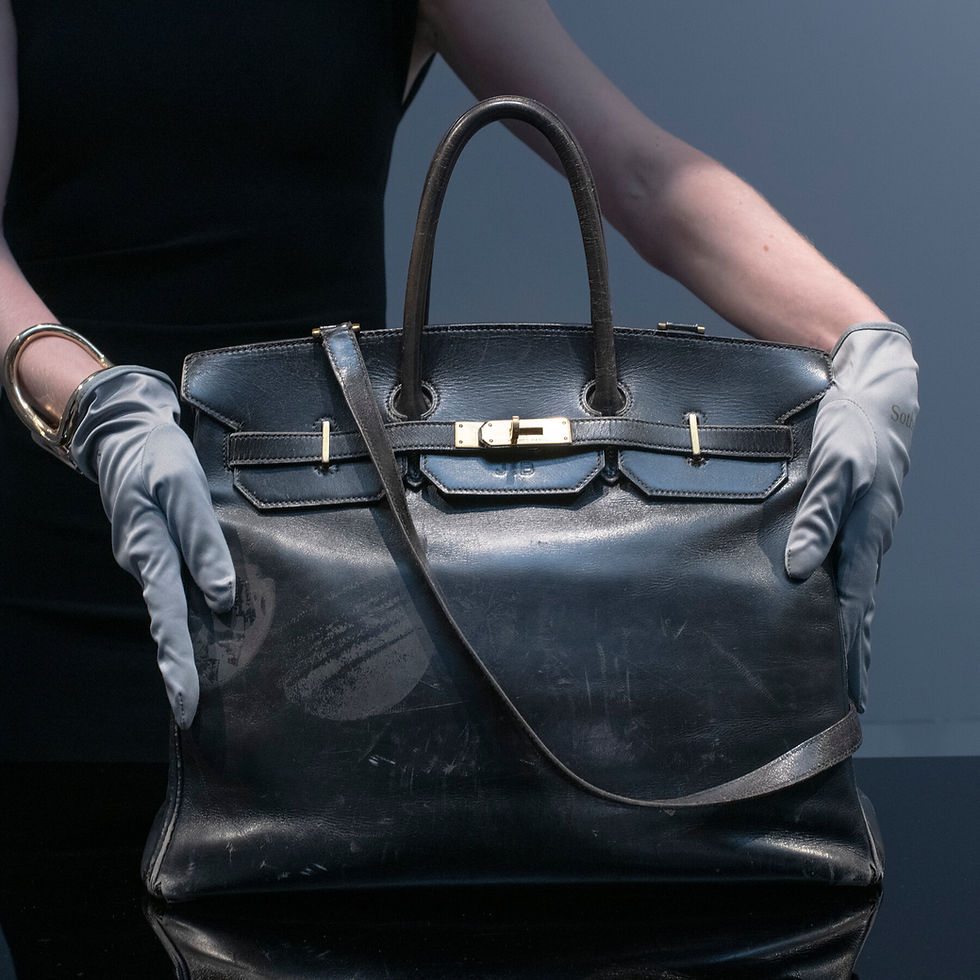
The silhouette featured generous proportions, structured craftsmanship, durable leather, double rolled handles, a secure flap closure, and enough room for daily essentials. Everything about it reflected Hermès' heritage of exceptional leatherwork and practical design. Unlike many luxury handbags created solely for visual appeal, the Birkin was intended to be used. That philosophy remains part of its tasteful allure today. However, what transformed the Birkin from an elegant leather bag into the ultimate luxury object wasn't advertising. It was scarcity. Exclusivity, even.
Hermès never aggressively marketed the Birkin. Instead, the house relied on meticulous craftsmanship, limited production, and an unwavering commitment to quality. Every Birkin is handcrafted by a single artisan, often requiring many hours of precise work before completion. The result? Demand quickly outpaced supply. Waiting lists became legendary. Ownership became aspirational. The bag evolved beyond fashion into something closer to mythology. Its own entity, if you will. Completely not what Jane thought she was inspiring. Perhaps the most fascinating part of the Birkin story is Jane herself.
Despite inspiring the world's most famous handbag, she remained refreshingly indifferent to luxury's obsession with it. She famously personalized her own Birkin bags with stickers, keychains, ribbons, and charms, allowing them to age naturally through years of daily use. Scuffed corners didn't diminish their value in her eyes. They enhanced it. Her bags reflected a life fully lived, not one carefully curated. In an era where pristine condition often defines luxury, Jane reminded the fashion world that true style comes from individuality — not preservation, a lesson the industry can use a refresh on.
Four decades after its debut, the Birkin remains one of fashion's greatest achievements because it represents more than exclusivity. It represents craftsmanship over convenience. Function over excess. Story over spectacle. Its origin wasn't engineered by a branding team. It was born from an authentic conversation between a woman seeking a better handbag and a craftsman willing to listen. Perhaps that's why the Birkin continues to captivate generations of collectors and fashion enthusiasts. Because behind every iconic object is an even better story. And few stories in luxury are as timeless as the one sketched on an airplane, somewhere above the clouds.
Today, the Birkin occupies a unique place in luxury culture. It appears on auction blocks alongside fine jewelry. Rare editions command extraordinary prices. Collectors treat exceptional pieces as long-term investments, while stylists continue to pair vintage Birkins with contemporary wardrobes, proving the design's remarkable longevity. Unlike trend-driven accessories, the Birkin has resisted becoming dated.
Its appeal lies not in reinvention, but in consistency.


Comments